
Wittgenstein's Teaching Trials, and Cavell's Romantic Child
Michael A. Peters,
2025/10/22

Few people think of Ludwig Wittgenstein as a schoolteacher, but that's what he did for a number of years in the 1920s. Nobody thinks he was a particularly good teacher, and he was probably unfit for the role. Still, he was an astute observer and brought to us several pedagogical insights, summarized on one of the slides in this presentation: "Children acquire language and concepts through practice and engagement, not through abstract explanation or formal instruction. Meaning emerges from specific situations and cultural practices, challenging universal educational approaches. Each child brings unique experiences and capabilities that resist standardization and uniform treatment." From this emerges Stanley Cavell's concept of the 'romantic child' that "embodies the democratic ideal of genuine participation in public life... for wonder, questioning, and authentic response provides a model for democratic citizenship." Slides probably from Michael A. Peters though there's no author named on them; see also this video, this thread, and this thread.
Web: [Direct Link] [This Post][Share]
There is no God Tier video model
Justine Moore,
a16z,
2025/10/22
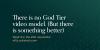
I'm linking to this more as a data point about video-generation AI models than anything else, but it's worth taking note: "We're beginning to see models specialize across specific dimensions: there is no 'God Model' that's great at everything. Startups are finding new opportunities across two main dimensions: video models that excel at one key thing (Physics! Anime! Multiple shots!) and products that abstract away arduous workflows." This is a development that should be expected across all of AI. Different AI will be defined by different training, contexts and prompts to produce different outcomes and specialize in different areas. Some AI will be expert at medical diagnosis, for example, while others will be laughably bad. The question is: how do we optimize an AI to support learning? Will one model be enough? Or do we need different models for different learners in different scenarios?
Web: [Direct Link] [This Post][Share]
Ten Principles of AI Agent Economics
Ke Yang, ChengXiang Zhai,
arXiv,
2025/10/22
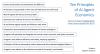
Anil Dash has a recent post The Majority AI View in which he argues "AI is a normal technology like any other." I am inclined to agree, which is why I find this article relevant. It's a level-headed assessment of how, where and why AI agents will develop the way they will in the future. It doesn't involve unreasonable hype nor apocalyptic fears. There won't be a single AI running everything; like most other things, as humans work with them as tools or agents there will be many versions pursuing different agendas interacting and sometimes competing with each other. I've made a simple graphic (by hand, heh) to make the paper a bit more accessible and use it to illustrate this post.

Web: [Direct Link] [This Post][Share]
There are many ways to read OLDaily; pick whatever works best for you:
- Read in your web browser on this web page, updated weekdays
- Receive a daily or weekly email newsletter by subscribing here
- Subscribe to the RSS feed using your favourite feed reader
- Follow @OLDaily@mastodon.social on Mastodon or elsewhere in the fediverse
- Follow @OLDaily on Bluesky
- Read OLDaily as a LinkedIn Newsletter
- Integrate the open API using the JSON feed
This newsletter is sent only at the request of subscribers. If you would like to unsubscribe, Click here.
Know a friend who might enjoy this newsletter? Feel free to forward OLDaily to your colleagues. If you received this issue from a friend and would like a free subscription of your own, you can join our mailing list. Click here to subscribe.
Copyright 2025 Stephen Downes Contact: stephen@downes.ca
This work is licensed under a Creative Commons License.