
So There!
Michael Canuel,
CANeLearn - The Canadian eLearning Network,
2025/10/21

There are some good ideas in this list of (in my opinion) very average ideas. I'll focus on the good: "Ask kids to draw a 'learning map' showing the steps they used to solve a problem." Mapping takes things out of the realm of text and helps students visualize. "In the middle of an activity, change the rules or tools." The lesson that 'things change' will help students adapt, and will also redefine what they think about concepts like rules and fairness and more. "Tell them the sun goes to sleep at night. Then demand proof you're wrong." My father was full of arguments like this. My go-to has always been, 'the movement of the trees is what causes the wind to blow'. Though I don't demand proof; it's better to have students learn to challenge things on their own without having to be told.
Web: [Direct Link] [This Post][Share]
AI threatens universities’ ability to bolster democracy
Dirk Lindebaum, Gazi Islam,
Times Higher Education (THE),
2025/10/21

The story here is much more complex than as presented by the authors. Their argument is that AI threatens the role of universities, and therefore, the continuation of "an educated citizenry able and willing to actively participate in democratic nations' will-formation and governance." It's probably true that education is a core requirement for social well-being, not just a "skilled labour force", but there's a lot more to be said about the universities' role here. Universities have always been willing to serve at the feet of power. There's a story yet to be written very well in our histories about the oft-repeated cycle of massification of education, subsequent expression of the will of the people, and immediate retrenchment to restore the rights of the privileged. It's like that old joke about 'how many psychologists does it take to change a light bulb?' Just one, but the light bulb has to want democracy. Open access but archived just in case.
Web: [Direct Link] [This Post][Share]
Digital Identity Market to Exceed $80B by 2030
Kezia Jungco,
TechRepublic,
2025/10/21

According to this article, "the global digital identity market will reach $80B by 2030 as regulation, interoperability, and hybrid identity strategies accelerate adoption." The dollar figure doesn't interest me, but the oncoming widespread adoption of digital identity everywhere is of significant importance to everyone, including especially educational institutions and learning providers. "For enterprises, the takeaway is clear: as governments build the infrastructure for trusted digital credentials, the private sector will need to align security and identity strategies. Businesses should turn compliance into an opportunity by simplifying authentication, improving customer experience, and preparing for a more connected digital economy." The full report is behind a paywall but you don't really need it.
Web: [Direct Link] [This Post][Share]
An Opinionated Guide to Using AI Right Now
Ethan Mollick,
One Useful Thing,
2025/10/21

This is a pretty good guide to what you can use in the world of generative AI right now (there are many AI applications outside this but they are specialized and usually embedded in applications, such as automated translation, image editing, etc). "The four most advanced AI systems are Claude from Anthropic, Google's Gemini, OpenAI's ChatGPT, and Grok by Elon Musk's xAI. Then there are the open weights AI families, which are almost (but not quite) as good: Deepseek, Kimi, Z and Qwen from China, and Mistral from France... Any other AI service you use that offers a cutting-edge AI from Microsoft Copilot to Perplexity (both of which offer some free use) is powered by one or more of these nine AIs as its base."
Web: [Direct Link] [This Post][Share]
Vector Database by Hand
Tom Yeh,
AI by Hand,
2025/10/21
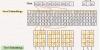
Tom Yeh posted this as a note this week, but it's worth going back to the article from last year to see the full explanation. He writes, "My son is about to learn cosine in high school trig. He probably will roll his eyes and think: 'what a waste of time.' I made this walkthrough by hand to tell him that cosine is what powers vector databases." When I studied trig I was into electronics so I knew it was useful. But my education never ever included vectors and arrays, so it feels a bit like a lost art to me. I'm better now.
Web: [Direct Link] [This Post][Share]
There are many ways to read OLDaily; pick whatever works best for you:
- Read in your web browser on this web page, updated weekdays
- Receive a daily or weekly email newsletter by subscribing here
- Subscribe to the RSS feed using your favourite feed reader
- Follow @OLDaily@mastodon.social on Mastodon or elsewhere in the fediverse
- Follow @OLDaily on Bluesky
- Read OLDaily as a LinkedIn Newsletter
- Integrate the open API using the JSON feed
This newsletter is sent only at the request of subscribers. If you would like to unsubscribe, Click here.
Know a friend who might enjoy this newsletter? Feel free to forward OLDaily to your colleagues. If you received this issue from a friend and would like a free subscription of your own, you can join our mailing list. Click here to subscribe.
Copyright 2025 Stephen Downes Contact: stephen@downes.ca
This work is licensed under a Creative Commons License.