Global education and technology: insights into transnational student and staff digital experiences
Tabetha Newman, Elizabeth Newall,
JISC,
2025/10/15
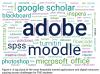
This report (132 page PDF) follows from an earlier report, and takes four digital challenges it identifies (access to technology; access to platforms, software, e-books and e-journals; cultural differences; digital skills) as a starting point (and, for that matter, as an ending point, as all these are identified as core elements of the staff and student experience). After a brisk executive summary, it offers some 48 recommendations which a fair-minded reading would say extrapolate beyond the actual findings described in the report. Things that stood out for me include the list of hard-to-access resources, which included the Adobe suite, learning platforms, MS Office, and Google Scholar. I also thought that, based on the box plot (figure 7), students' deficiencies in digital capabilities were overstated. And the ways asynchronous learners experienced learning very differently from the rest bears further investigation.
Web: [Direct Link] [This Post][Share]
In Education, The Genre is the Content.
Clark Aldrich,
Feed the Heroes or Lose the Heroes,
2025/10/15
This article feels like it ends too quickly. I guess that's a natural response for the first of three parts, but at only 399 words (I counted) it is definitely too short to be satisfying. Anyhow, I'm still referencing it because it's an interesting idea to say that the genre is the content. Here's the little Clark Aldrich gives us to expand on this idea: "no matter the topic, all lectures teach variations on the same skills - listening, note taking, asking questions, and then using that 'learning to know' information to write papers and complete tests." I'm not sure that's exactly the limit on learning that happens through lectures - often, for example, when I give a talk I'm trying to shift the listener's perspective, so they don't learn new things so much as they see other things in a new way. But still - the idea that what you're learning is the process afforded by the lecture, and not the specific content, is a good one.
Web: [Direct Link] [This Post][Share]
Web Publishers Should Block AI Bots. Here's Why & How.
Nate Hake,
Travel Lemming,
2025/10/15
"The open web is under attack by AI bots that steal web publishers' content," writes Nate Hake on some travel blog site. Normally I wouldn't bother, but it's referenced by Paul Prinsloo and is yet another article referencing an imaginary 'social contract' that is violated by AI. "In the past," writes Hake, "search engines and platforms sent real human users to websites. Today, they increasingly send AI bots instead." But search engine traffic matters only if you run advertisements on your site; for people like me, the traffic sent by Google, say, is just traffic I have to pay for. That's why I'm happy to syndicate my site on RSS and social media; it's good for me if people read my stuff elsewhere. So I don't mind if AI bots crawl my site (provided they don't amount to a DOS attack) and my only real desire would be to have AI credit me with an idea if it happens to originate with me. But even this isn't part of any 'social contract'. Sure, if you don't want AI to crawl your site, block it (or turn over control of the internet to Cloudflare, your call). To me, sharing the ideas is what counts, and sharing is not transactional and not based on any social contract.
Web: [Direct Link] [This Post][Share]
An Introduction to Geospatial Thinking and Open Source GIS
Jennifer Moore,
An Introduction to Geospatial Thinking and Open Source GIS, WashU Libraries,
2025/10/15
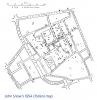
Cartography has been a longstanding interest of mine (I've been making maps since I was a child) and so this new open book on geospatian thinking was a must-read. Through the first half (I did not do the second section, 'Hands-On Workbook' using open source Geographic Information System (GIS) software) it did not disappoint. The first two chapters are a very gentle introduction to the subject, then it speeds up considerably when discussing projections and geospatial data. I would also have selected a different set of illustrations; they're either too low quality (eg. the 'orange' image) or too detailed (eg. 'illustration of GIS components'). It also contains the world's shortest full-chapter description of project management. Most importantly, of course, it is an open book, which means that if I had the time and inclination to improve it, I could. Via CCCOER.
Web: [Direct Link] [This Post][Share]
There are many ways to read OLDaily; pick whatever works best for you:
- Read in your web browser on this web page, updated weekdays
- Receive a daily or weekly email newsletter by subscribing here
- Subscribe to the RSS feed using your favourite feed reader
- Follow @OLDaily@mastodon.social on Mastodon or elsewhere in the fediverse
- Follow @OLDaily on Bluesky
- Read OLDaily as a LinkedIn Newsletter
- Integrate the open API using the JSON feed
This newsletter is sent only at the request of subscribers. If you would like to unsubscribe, Click here.
Know a friend who might enjoy this newsletter? Feel free to forward OLDaily to your colleagues. If you received this issue from a friend and would like a free subscription of your own, you can join our mailing list. Click here to subscribe.
Copyright 2025 Stephen Downes Contact: stephen@downes.ca
This work is licensed under a Creative Commons License.