Content Credentials
C2PA,
2025/10/08
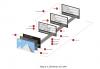
Provided by the Coalition for Content Provenance and Authenticity (C2PA), Content Credentials are "an open technical standard for publishers, creators and consumers to establish the origin and edits of digital content. provide deeper transparency into how content was created or edited." Most of the public-facing content is a bit vague on how they work, but you can get a full description of the specifications here. A Credential is composed of assertions ("statements that cover areas such as asset creation, edit actions, capture device details") wrapped into a claim, which is signed and packaged into a Manifest, which is embedded in the content itself. A C2PA validator "helps users to establish the trustworthiness of the asset by first validating the digital signature and its associated credential." Content credentials can be accessed by clicking on a Content Credential logo (which looks a lot like an Adobe product logo, unfortunately). There are implementations by companies such as Adobe, Nikon, Sony, Canon, and others. Google just adopted it for the Pixel, and there are rumblings Apple may also adopt it. Most important, there are implementations underway in generative AI providers such as Microsoft and OpenAI though implementation has been inconsistent. See also the Phoblographer, Bernard Grenat,
Web: [Direct Link] [This Post][Share]
Google's latest AI model uses a web browser like you do
Emma Roth,
The Verge,
2025/10/08
As Emma Roth reports, "Google has released a new Gemini AI model to developers that's designed to use a browser to navigate around and interact with web pages designed for people." This is interesting because it is similar to the way I've automated my OLDaily posts on LinkedIn. I wonder whether we're seeing a general shift from APIs to browser interfaces to access remote services.
Web: [Direct Link] [This Post][Share]
What Can We Learn From Anthology's Demise?
Alfred Essa,
AI-Learn Insights,
2025/10/08

Alfred Essa assesses the Anthology bankruptcy thus: "Its growth thesis was that colleges would prefer an all-in-one platform linking academic and administrative systems - a synergy that never materialized." Why? "Faculty and academic leaders typically choose the LMS; registrars and CIOs choose SIS/ERP systems. Those decisions are siloed, making cross-selling impossible at scale." But it wasn't just that. Blackboard, acquired by Anthology in 2021, was already struggling. The Blackboard Learn rollout had problems, and price increases were costing the company customers. Ultimately, Anthology ran up more debt than it could ever pay off.
Web: [Direct Link] [This Post][Share]
Virtual Microscope
The Open University,
2025/10/08
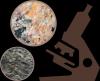
This is a cool resource. "The Virtual Microscope (VM) for Earth Sciences (enables) access to rock collections that are currently held in museums, universities and other institutions around the world (and) allows users to examine and explore minerals and microscopic features of rocks, helping them to develop classification and identification skills without the need for high-cost microscopes and thin section preparation facilities." Needless to say, I went straight to the Apollo Lunr Missions collection to look at some samples collected some 55 years ago. Via Alan Levine. I guess it's not long before we have an AI-generated virtual microscope that lets us look at all manner of tiny things. But still, I like the idea of looking at actual moon rocks.
Web: [Direct Link] [This Post][Share]
Open Heritage Statement
Creative Commons,
2025/10/08
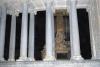
In 2008 I stood outside the Prado Museum in Madrid - probably one of the most famous in the world - and decided not to go in, because they would not allow me to photograph anything inside. It's not like the contents were still under copyright; it's all about enclosing the artworks to keep making money off them. This to me is the sort of thing Creative Commons should be pushing back against with this statement. Here's the statement. It's not nearly as clear as I would like and I think it has a mixed agenda (for example, abridging moral rights), but the draft has a good chance of becoming a UNESCO statement, so it's worth looking at. Photo from Madrid (outside) by me.
Web: [Direct Link] [This Post][Share]
A cartoonist's review of AI art
Matthew Inman,
The Oatmeal,
2025/10/08
It will take a few minutes to scroll through this mixture of artwork and essay, but it's an easy read and gives you some insight into how generative AI is seen through the eyes of a cartoonist. It's not quite what you might expect, but the main point is (and here I put words into the author's mouth, since he doesn't express it exactly this way) the provenance of the art we 'consume' (his word) matters. I like the example of Jurassic Park, and would have added that while the animatronics of the first movie caught my interest, the use of CGI-generated dinosaurs in Jurassic World didn't interest me at all, and I never did see the movie. But what's interesting in all this is that all of this is happening in my own head - the meaning of the content doesn't come from the author and it's not contained in the content. It's created by me when I consume it, which is why what I know about the content - the provenance, for example - matters.
Web: [Direct Link] [This Post][Share]
There are many ways to read OLDaily; pick whatever works best for you:
- Read in your web browser on this web page, updated weekdays
- Receive a daily or weekly email newsletter by subscribing here
- Subscribe to the RSS feed using your favourite feed reader
- Follow @OLDaily@mastodon.social on Mastodon or elsewhere in the fediverse
- Follow @OLDaily on Bluesky
- Read OLDaily as a LinkedIn Newsletter
- Integrate the open API using the JSON feed
This newsletter is sent only at the request of subscribers. If you would like to unsubscribe, Click here.
Know a friend who might enjoy this newsletter? Feel free to forward OLDaily to your colleagues. If you received this issue from a friend and would like a free subscription of your own, you can join our mailing list. Click here to subscribe.
Copyright 2025 Stephen Downes Contact: stephen@downes.ca
This work is licensed under a Creative Commons License.