Step Away from the Chatbot: a Letter to a Student about AI and Creativity
Lindsay Brainard,
Blog of the APA,
2025/09/12

This article offers two "bad reasons" and three "good reasons" to write a poem by hand instead of using ChatGPT. The "good reasons" have what seems to me to be an odd phrasing. Here they are: "Creativity is not just about bringing things into existence; Creativity offers a path to figuring ourselves out; and Creativity enables meaningful connection with others." The are all good things associated with creativity, no doubt. But, can we not be creative with ChatGPT as well? I mean, look at Jim Groom's (ridiculous but inspired) AI replaying of the 2000-2001 NFL football season. That's creative!
Web: [Direct Link] [This Post][Share]
The multi-dimensional, multi-level impact of social capital on academic job search in China: A comparison between domestic PhDs and PhD returnees in the social sciences
Yuejia Wang, Yunjia Xie, Xiaoli Jing,
Higher Education,
2025/09/12
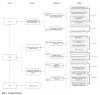
I have often expressed the opinion that the major value of an Ivy League education is the network of connections students develop, as opposed to a (fictional) difference in the quality of their education. This article explores that idea, but in a very different context: China. As such it names and describes the system of sociel ties that confer an advantage to students who study under a well-connected advisor in the domestic university system, as opposed to those who travel overseas to study in western institutions. "Domestic PhDs benefit from deep-rooted local networks, particularly advisor-related ties (shimen), institutional prestige, and informal job-search channels... Underpinning these dynamics is China's renqing society (a moral system of intimacy, reciprocity and obligation), where guanxi (personal connections embedded in trust, exchange, and hierarchy) remains central to academic recruitment. More research with much larger populations would be required to show how pervasive these factors are.
Web: [Direct Link] [This Post][Share]
Supporting the Next Generation of AI-Native Learners
Teodora Pavkovic,
Teach Magazine,
2025/09/12

I'm not sure when I first heard the term 'AI Native' (where's Marc Prensky when we need him?) but it's sure to become a coinage of the realm soon. This article looks first at how AI is being used in schools (interestingly: as companionship, as mental health and support, and only third, to support learning and schoolwork) and then at the sort of things schools should do now to "equip students with to prepare them for a future where AI is a part of their life." The first three are 'the usual' (privacy, core competencies, critical thinking) while the last two stretch our thinking a bit (prompting skills, task stewardship).
Web: [Direct Link] [This Post][Share]
"It's a monster": How generative AI is forcing university professors to rethink learning
Roe McDermott,
The Irish Times,
2025/09/12
I love the irony of these two statements placed side by side at the end of this article: on the one hand, "Fitzgerald says. 'We need them to struggle with difficult texts and emerge changed.'" And on the other hand, "the battle continues... against systems that make it harder and harder for both students and educators to do meaningful work." Via Grant Potter.
Web: [Direct Link] [This Post][Share]
Are we living in a stupidogenic society?
Daisy Christodoulou,
No More Marking,
2025/09/12

"The cost of physical machines is human obesity," writes Daisy Christodoulou, while "the cost of intelligent machines is human stupidity." It's an interesting analogy. We're familiar with how skilled people can become with practice: people who work in markets counting change, for example. But it's not a one-sided exchange. We would not want to go back to the days when being a human 'calculator' was a necessary skill. Similarly, people may weigh more today, but they also live longer. And I think there are limits to the analogy - unlike the case of physical weight, new types of mental skills can replace the old skills.
Web: [Direct Link] [This Post][Share]
There are many ways to read OLDaily; pick whatever works best for you:
- Read in your web browser on this web page, updated weekdays
- Receive a daily or weekly email newsletter by subscribing here
- Subscribe to the RSS feed using your favourite feed reader
- Follow @OLDaily@mastodon.social on Mastodon or elsewhere in the fediverse
- Follow @OLDaily on Bluesky
- Integrate the open API using the JSON feed
This newsletter is sent only at the request of subscribers. If you would like to unsubscribe, Click here.
Know a friend who might enjoy this newsletter? Feel free to forward OLDaily to your colleagues. If you received this issue from a friend and would like a free subscription of your own, you can join our mailing list. Click here to subscribe.
Copyright 2025 Stephen Downes Contact: stephen@downes.ca
This work is licensed under a Creative Commons License.