Enough With the Blue-books Already!
Steven D. Krause,
2025/09/09
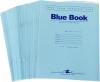
I view this, authored by Katie Day Good, as good opinion but bad science: "My students' handwritten essays brim with their humanity. Each page conveys personality, craft, voice, and a 'realness' that feels increasingly scarce in our screen-saturated, algorithmically-distorted information environment." I don't see how we could consider assessment based on a teacher's 'feels' as in any way fair or objective. So I support Steven Krause's perspective here. This perspective is just lazy. "That it is both possible and reasonable to make judgements about the writer based on their handwriting, that more of one's humanity is revealed through handwriting... that's just (bad science)." I reiterate my call to make assessment AI-agnostic. If you aren't assessing a student for anything an AI couldn't do, then just what are you assessing a student for? Certainly not their humanity.
Web: [Direct Link] [This Post][Share]
A[I]s We Many Not Think (nor search, nor link)
Alan Levine,
CogDogBlog,
2025/09/09

If I had to summarize this 4260 word blog post, I would summarize it like this: the problem with AI search is that it shortcuts a complex process with a simple (and not especially useful) substitute. For example, "there is this consistent focus on search being getting answers to questions... but more often than not, I am not looking for answers in my search." Same here. But more, AI search shortcuts the whole process of following links to their source and things like associative search ("far flung bits of information... I relate through my lived experiences). There's a deeper point here, too: there's a big difference between research as 'solving problems' and research as 'discovery'. The business and productivity mindset is firmly fixated on the former, which is why we get the AI search we do, but people like me (and, I guess, Alan Levine, though I hesitate to speak for him) are far more interested in the latter, because it takes us to places we haven't been to before (and which is why my Age of Discovery photo (pictured) hangs on my office wall).

Web: [Direct Link] [This Post][Share]
FedCM: A New Proposed Identity Standard That Could Change How We Log In on the Web
Dan Moore,
InfoQ,
2025/09/09
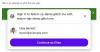
This is a full and detailed account of the Federated Credential Management (FedCM) API, which is being proposed by a W3C working group to support federated logins on browsers that block third party cookies. ("A federated login occurs when one application delegates the login process to another application called an identity provider," for example, when you login using your Google credentials. The difference is that FedCM provides a dedicated mechanism for federated identity on the web, instead of relying on iframes and third-party cookies. Not all browsers support it yet, but development is ongoing. More from Mozilla, Google, W3C.
Web: [Direct Link] [This Post][Share]
How We Could Build a Better Future for Creators in the Age of AI
Martin Dougiamas,
2025/09/09

I think this post is well-intentioned, and Martin Dougiamas is clear that many of the problems facing creators of digital content existed long before AI (for example, "music streaming, where platforms are valued in the tens of billions, yet artists earn fractions of a cent per stream"). The problem, to my mind, is that it's mostly framed around regulating and reining in AI. Now to be clear, I don't have a problem with regulating and reining in AI (though we could quibble about how and why). It's just that a vision for "a better future" requires a lot more than that. For example: why should creators of digital content have to scratch and scrape for a living at all? In an age of unparalleled prosperity, why should any of us? A society that replaces 90 percent of its workforce with automation still has a responsibility to that 90 percent; otherwise, it ceases to be a society. Let's talk about how to make that work, and about the sort of culture of expectations and values we need to be teaching in order to bring it about.
Web: [Direct Link] [This Post][Share]
Sam Altman says that bots are making social media feel 'fake'
Julie Bort,
TechCrunch,
2025/09/09

I don't think we needed Sam Altman to say this in order to see it for ourselves. I subscribe to some nice Reddit topics (like r/bikepacking and r/ottawa and r/antiwork) and they've been hit recently with a wave of anti-foreign-worker posts. Other waves are more subtle, like the wave of 'firefox does not work' posts on r/firefox and r/browsers. I can't comment on Twitter and Facebook, since I don't use those, but LinkedIn and Bluesky are full of generated content. I automate OLDaily posts on both of those, but as always, the posts are handwritten by me. Not that anyone could tell, and that's the problem.
Web: [Direct Link] [This Post][Share]
6 ways to use NotebookLM to master any subject
Marvin Paul, Dharti Dhami,
The Keyword,
2025/09/09

Here's how Google's AI summarizes its own article on Notebook LM (I just clicked on the 'summarize this page' link on the page): "NotebookLM now offers new features to help you actively learn and master subjects. You can now create flashcards and quizzes from your documents, generate tailored reports, and deepen understanding with the new Learning Guide. Also, explore trusted academic content from OpenStax and listen to your sources in new ways with Audio Overviews." Except for the OpenStax materials, which were available long before Notebook LM, I can't see any of these resources helping people learn in any meaningful way.
Web: [Direct Link] [This Post][Share]
There are many ways to read OLDaily; pick whatever works best for you:
- Read in your web browser on this web page, updated weekdays
- Receive a daily or weekly email newsletter by subscribing here
- Subscribe to the RSS feed using your favourite feed reader
- Follow @OLDaily@mastodon.social on Mastodon or elsewhere in the fediverse
- Follow @OLDaily on Twitter
- Integrate the open API using the JSON feed
This newsletter is sent only at the request of subscribers. If you would like to unsubscribe, Click here.
Know a friend who might enjoy this newsletter? Feel free to forward OLDaily to your colleagues. If you received this issue from a friend and would like a free subscription of your own, you can join our mailing list. Click here to subscribe.
Copyright 2025 Stephen Downes Contact: stephen@downes.ca
This work is licensed under a Creative Commons License.