Introducing CC Signals: A New Social Contract for the Age of AI
Creative Commons,
2025/06/25

Announced today, the CC Signals proposal builds on the IETF draft Vocabulary For Expressing AI Usage Preferences. The idea is that you can declare "ai:no" or "genai:no" in your headers or robots exclusion file, as defined in the draft, and then add a Creative Commons 'exception' to the rule, for example, if the user gives credit or "monetary or in-kind support" for the use. It's worth noting that there's no 'non-commercial' exception defined. Instead, it flips the concept of 'sharing' on its head and defines it as transactional; you can use the content for AI only if you 'give back'. Unlike traditional Creative Commons licenses, it is not backed by law; that's why it's only a 'preference'. It allows users to pretend there's some law against AI use of the content, and then create ways to allow use in spite of that. It represents it as a social contract, but it's not a social contract. Anyhow, there's a White Paper describing the initiative, a discussion board to talk about it, and an implementation guide on GitHub. Right now only the 'credit' signal is implemented (as: ai=n;exceptions=cc-cr ) but let me suggest the non-commercial signal (we'll call it the "Downes exception") as exceptions=cc-nc and the 'contribution' exception as exceptions=cc-payMEpayME.
Web: [Direct Link] [This Post][Share]
Models for a multi-national university – The Ed Techie
Martin Weller,
The Ed Techie,
2025/06/25

Martin Weller reports on being invited to the UN as part of a group of experts considering a proposal to develop a UN online university in STEM for Least Developed Countries (LDCs). On this post he outlines five potential models for such a venture, noting that, as always, the difficulty is in the details. He suggests "a network overseen by a reliable, experienced provider with a strong established model of online education," which is what we might expect from someone (formerly) from the Open University. In the comments Gavin Moodie references the Commonwealth of Learning, which the UN would do well to emulate.
Web: [Direct Link] [This Post][Share]
Lemm.ee communities migration megathread
PieFed,
2025/06/25

Lemmy is a self-hosted social link aggregation and discussion platform. It is similar to Reddit but is federated (like Mastodon) using ActivityPub. The major difference is that communities, as well as individuals, can have identities on individual instances (eg., europe@feddit.org) One of the largest Lemmy servers, lemm.ee, however, has announced that it is shutting down, citing admin burnout. So the migration is on, and it's not an easy process. This creates an opportunity for PieFed, another fediverse server similar to Reddit, which has just released the 1.0 version. It has grown significantly over the last few weeks, according to Fediverse Observer. Via Laurens Hof.
Web: [Direct Link] [This Post][Share]
USG Student Guide to Generative AI Literacy
University System of Georgia,
2025/06/25

This document (22 page PDF) isn't overly deep but it's a well-rounded and current overview of the essentials of AI use for students in the U.S. state of Georgia. It overviews uses of generative AI, tool selection, prompting and conversation, issues of reliability and integrity, and how to develop your own critical understanding. Distributed by the University System of Georgia (USG) Office of Teaching and Learning Excellence along with MomentumU@USG under a Creative Commons licese, which allows me to make it available for download here.
Web: [Direct Link] [This Post][Share]
Directive on Automated Decision-Making
2025/06/25

The Treasury Board of Canada Secretariat has released a revised and updated directive on automated decision-making and with it, which is even more interesting, an Algorithmic Impact Assessment tool. The tool will ask you a series of questions about your project - about the system, algorithm, decisions being made, and how you have mitigated any risks (there's 13 pages of questions; it's quite detailed) and then generate an impact assessment report. None of your input is collected by the tool; it stays on your desktop and disappears when the page is closed, unless you save your progress as a JSON file. Developed over the last six years, it's brilliantly done in Vue and Typescript and you can see the code here on GitHub.
Web: [Direct Link] [This Post][Share]
Online English tests could cut carbon emissions by 98%
The PIE News,
2025/06/25
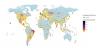
Duolingo has taken a lot of criticism recently for its use of AI but I think it's raising a valid counterargument here: "traditional, in-person English tests generate an average of 14.3kg of CO₂e per test. By contrast, a remote digital test produces just 0.16kg of CO₂e, highlighting a potential 98% reduction in carbon emissions." "The report, created in partnership with Duolingo, focussed on the carbon cost of English proficiency testing for students choosing to study in the UK."
Web: [Direct Link] [This Post][Share]
There are many ways to read OLDaily; pick whatever works best for you:
- Read in your web browser on this web page, updated weekdays
- Receive a daily or weekly email newsletter by subscribing here
- Subscribe to the RSS feed using your favourite feed reader
- Follow @OLDaily@mastodon.social on Mastodon or elsewhere in the fediverse
- Follow @OLDaily on Twitter
- Integrate the open API using the JSON feed
This newsletter is sent only at the request of subscribers. If you would like to unsubscribe, Click here.
Know a friend who might enjoy this newsletter? Feel free to forward OLDaily to your colleagues. If you received this issue from a friend and would like a free subscription of your own, you can join our mailing list. Click here to subscribe.
Copyright 2025 Stephen Downes Contact: stephen@downes.ca
This work is licensed under a Creative Commons License.