Cancelling in-person Congress wounds humanities research
Michael Holden,
University Affairs,
2025/06/12
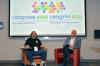
Let me preface this post by saying I have been super-privileged to be able to go to so many academic events around the world. But therein lies the exact problem with Congress (and similar events). Michael Holden writes, in defence of Congress, that "Congress isn't just an event, it's a community." Right. Exactly. It's an exclusive community where you need institutional and financial backing to have a seat at the table. And as more and more of these take place, the more attendees retreat into their own community and away from the wider world. In a way I'm not only been privileged, I've been lucky. The life of someone like me is that you're never actually a member of any of these communities; always an outsider, I can (sort of) see the wider world, and the incongruence insider societies foster is plain to me. I've always argued for open, and always made my presentations open (despite some reluctance from my hosts), and always wondered why more (or any!) academics don't do the same.
Web: [Direct Link] [This Post][Share]
The Forge
LibreTexts,
2025/06/12

According to the email announcement, this platform "enables instructors to design renewable, collaborative long-form assignments and gives students meaningful opportunities to produce public-facing, openly licensed work... the Forge supports a learner-centered, participatory approach that scales across class sizes and disciplines." On the website it says, "the best way to assess the integrity of student writing in the AI writing era is through the depth and quality of students' effort while they are drafting and revising assignments. In essence, The Forge ensures that students honor the process." I will say, when I went to try it, I went through a looooong registration process (that very much wants me to be affiliated with some educational institution). And I can't actually write anything without an assignment key from an instructor. Not sure why that should be necessary. It all feels like an exercise in control, not openness.
Web: [Direct Link] [This Post][Share]
How Do You Build a Learner-Centered Ecosystem?
Bobbi Macdonald, Alin Bennett,
Getting Smart,
2025/06/12
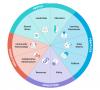
This article appears to be advertorial content for Education Reimagined (I can't tell from their web page whether they're a company, advocacy group, or something else) and while I agree with the core premise that education should be learner-centered, everything else seems to work against that. The idea that"vision must be shared," for example, runs counter to the idea that there are multiple perspectives(especially among learners). The idea of "forming a community steering committee and cultivating strong civic partnerships" sounds great but in reality entrenches existing power structures. Collaboration is fine if it's student-initiated and vendor neutral, but programs are run through specific companies (like Spark NC and Big Thought). What we have here, I think, is 'shopping mall diversity' - different types of organizations, but all based on a buy-and-sell premise.
Web: [Direct Link] [This Post][Share]
Empower Your Community with Digital Badges
VocalCat,
2025/06/12

This of this as digital badges meets the fediverse. BadgeFed is "designed for communities to create and manage their own badge ecosystems with full autonomy." There's no single point of control. "Badge issuers maintain their own systems while staying connected." I haven't tried it yet but it seems like a natural for a decentralized learning ecosystem. Via Alan Levine. See also: deightful fediverse apps.
Web: [Direct Link] [This Post][Share]
Exploring AI’s Role in Education: A Balanced Perspective from Six Think Pieces
Laura Hilliger,
We Are Open Co-op,
2025/06/12

There's a bunch of stuff on AI and education collected into this one post. It begins with a set of responses to a UNESCO's call for think pieces (which sadly I didn't hear about until after it had passed), which are linked here: contributions are from Bryan Alexander, Helen Beetham, Doug Belshaw, Laura Hilliger, Ian O'Byrne, and Karen Louise Smith. The authors then held a well-attended online discussion; there's a link to a recording and a nice AI-generated summary. Finally, the post finishes with reflections on a set of key issues. Bryan Mathers illustrates.
Web: [Direct Link] [This Post][Share]
The Ten Warning Signs
Ted Gioia,
The Honest Broker,
2025/06/12
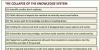
Doc Searls references this article that is a bit over-the-top but not completely wrong. "The knowledge structure that has dominated everything for our entire lifetime - and for our parents and grandparents - is collapsing," writes Ted Gioia. There's an element of truth to this, but Gioia conflates widely disparate phenomena - the weird sort of scepticism expressed by Robert F. Kennedy Jr., for example, and the failure of social sciences studies to replicate. The justified scepticism of corporate-owned media, for example, and the very real threat of Covid. Crypto-scams and tech exploits on one hand, for example, and declining funding for research and development on the other. There is something happening, but it's not this.
Web: [Direct Link] [This Post][Share]
There are many ways to read OLDaily; pick whatever works best for you:
- Read in your web browser on this web page, updated weekdays
- Receive a daily or weekly email newsletter by subscribing here
- Subscribe to the RSS feed using your favourite feed reader
- Follow @OLDaily@mastodon.social on Mastodon or elsewhere in the fediverse
- Follow @OLDaily on Twitter
- Integrate the open API using the JSON feed
This newsletter is sent only at the request of subscribers. If you would like to unsubscribe, Click here.
Know a friend who might enjoy this newsletter? Feel free to forward OLDaily to your colleagues. If you received this issue from a friend and would like a free subscription of your own, you can join our mailing list. Click here to subscribe.
Copyright 2025 Stephen Downes Contact: stephen@downes.ca
This work is licensed under a Creative Commons License.