
Ten Purportedly Essential Features of Consciousness
Eric Schwitzgebel,
The Splintered Mind,
2025/05/23

This article is a subtle but ultimately powerful argument against what might be called 'folk psychological' theories of consciousness. Basically, it lists ten features commonly assumed to be 'essential' to consciousness - that your experiences are inherently self-representational, for example, or that your experiences entail having a sense of oneself as a subject of experience. But there's no argument that can really be made for any of these, and theories of consciousness intending to prove these end up assuming them. This, of course, leads to the possibility that consciousness is none
Web: [Direct Link] [This Post][Share]
Mozilla is killing its Pocket and Fakespot services to focus on Firefox
Kevin Purdy,
Ars Technica,
2025/05/23

You might not know about Pocket, a product from Mozilla (who also make the Firefox browser). The idea was that you'd have an icon on your browser that you could click while reading the web to save the content into a place where you could find it and read it later. I used to use it and even had an RSS feed of my saved entries (so people so see what I was considering for OLDaily) but I ran into login problems and then the RSS feed stopped working so I wrote my own bookmarklet to save content directly (I also have a Pinboard I save content to but forget to read). Some people in Mastodon have mentioned Reader as an alternative; I tried it at home yesterday and it looked great, but it resolutely doesn't work on my office computer (for reasons I'm sure are entirely due to our dysfunctional internet access here).
Web: [Direct Link] [This Post][Share]
What Is Ethical AI?
Miguel Guhlin,
Another Think Coming,
2025/05/23

Here's another take on ethical AI, this time from Miguel Guhlin. He raises the question of whether any use of AI can be ethical, given (he says) its unethical origins. He asks Perplexity for a definition of ethical AI. And he shares a longish set of prompts to prime any AI system he uses to be ethical. While I am sympathetic with the desire to have ethical AI, and to use AI ethically, I once again have the feeling that we're presuming a whole ethical analysis for all technology and all uses of technology. I mean, sure, it's easy to instruct the AI to "maintain traceability of information sources while respecting legitimate confidentiality boundaries" and maybe we should yet at the same time (a) is this an ethical principle, and (b) is it specific to AI? Why are we so much more stringent about AI ethics than, say, the ethics of coffee production?
Web: [Direct Link] [This Post][Share]
Mississippi Can't Possibly Have Good Schools
Tim Daly,
The Education Daly,
2025/05/23
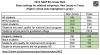
I am not ready to believe that Mississippi has one of the best education systems in the U.S. but that's the proposition being advanced here by consultant (TNTP, EdNavigator) Tim Daly. Looking through his previous work (his newsletter started in 2023) gives us the argument: if you look only at traditionally low-achieving students from lower demographics, then Mississippi performs better than schools in, say, New Jersey. "School rankings should be more like Olympic diving," he explains. "How would that work? Compare the degree of difficult to the result." And so for Mississippi. "The Urban Institute adjusted national test results for student demographics," and Mississippi began to rank first in eighth grade reading and math.
Web: [Direct Link] [This Post][Share]
Are people more productive working from home as opposed to working from the office?
Elicit,
2025/05/23

This is a 100% AI-generated paper I created in about ten minutes this morning on a subject of interest to me using the free version of Elicit's research generator. My prompt was nothing more than the title of the paper. It summarized results from the top 10 papers it found on the subject; a paid version would summarize results from many more papers. What did I learn? I should sort the research results better - the Atkins papers, for example, reported lower productivity, but on viewing the paper, I see a base pay of INR 8500 ($US 128.80) per month. I was motivated by an HBR webinar and a newsletter from Algorithm Watch on international gig work, both in my email today. Overall the Elicit work was pretty good, but I did note that while it's producing research summaries, it's still a long way from going out and doing the actual research studies that are being summarized.
Web: [Direct Link] [This Post][Share]
There are many ways to read OLDaily; pick whatever works best for you:
- Read in your web browser on this web page, updated weekdays
- Receive a daily or weekly email newsletter by subscribing here
- Subscribe to the RSS feed using your favourite feed reader
- Follow @OLDaily@mastodon.social on Mastodon or elsewhere in the fediverse
- Follow @OLDaily on Twitter
- Integrate the open API using the JSON feed
This newsletter is sent only at the request of subscribers. If you would like to unsubscribe, Click here.
Know a friend who might enjoy this newsletter? Feel free to forward OLDaily to your colleagues. If you received this issue from a friend and would like a free subscription of your own, you can join our mailing list. Click here to subscribe.
Copyright 2025 Stephen Downes Contact: stephen@downes.ca
This work is licensed under a Creative Commons License.