Mistakes in Action: On Clarifying the Phenomenon of Goal-Directedness
Jonathan Hill,
Biological Theory,
2025/04/24

The difference between systems and networks is, to my mind, that the former are goal-directed and the latter are not. But what does it mean to say that something is goal-directed? "Common sense tells us that biological systems are goal-directed," write the authors (14 page PDF), but "goal-directed actions are initiated and terminated not by environmental features and goals themselves, but by markers for them." That motivates us to want to say that a system embodies a representational state in a way that a network does not. Most of the article looks at the biological process of goal-directedness, but the fun begins about three quarters of the way through as the authors describe the philosophical implications of their findings. In particular, it makes me wonder whether goal-directedness is, in many cases, an epiphenomenon, that is, something that results from the behaviour (that we describe after the fact) rather than a cause of the behaviour. If not, "the correspondence of a representation to what it represents must be a cause of the usefulness of the representation." If it isn't - if it is, say, an innate response - it can hardly be said to be goal-directed.
Web: [Direct Link] [This Post][Share]
Missing the Bigger Picture on Flexibility and Online Learning
Glenda Morgan,
On EdTech,
2025/04/24
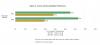
I couple of weeks ago I referenced The Educause 2025 Students and Technology Report with criticism of the survey. This article takes the same report to task, with a longer and more detailed criticism of the survey. "It's problematic that the report emphasizes a shift away from online learning without acknowledging that online enrollment rates are still rising, that student behavior often diverges from stated preferences, and that preferences vary significantly by factors like age and institutional context." The Educause report shouldn't be cited as evidence for anything without these caveats.
Web: [Direct Link] [This Post][Share]
Rubber Ducking For Research Communication: Why Explaining to Nobody Helps You Explain to Anybody
Charlie Rapple,
The Scholarly Kitchen,
2025/04/24

Rubber ducking, writes Charlie Rapple, "is a technique that is commonly used by coders...The premise is simple: when stuck on a problem, the programmer talks through their code line-by-line to a rubber duck. A small, yellow toy, sitting on the edge of the desk, unblinking, unjudgmental, maybe with head slightly cocked in listening mode." I can relate. Not to the duck part - I don't use a duck. If I want an audience that is "inanimate, unspeaking, making no effort" I just livestream my work. There's nobody watching, but the fact that the camera is there makes me speak as I work though things aloud. I have also found in the past that I get the same effect from doing presentations; my best ideas have come to me while working out loud. The secret isn't that the audience is disengaged, it's that you're presenting something in a way that needs to be concise and clear. Related: there was an article titled 'Cognitive Echo: Enhancing think-aloud protocols with LLM-based simulated students' in BERA today, but it's behind a paywall, and thus not doing anyone any good at all.
Web: [Direct Link] [This Post][Share]
Are universities indispensable?
Alexandra Mihai,
The Educationalist,
2025/04/24

The question in the title is not really answered, but Alexandra Mihai imagines what it would be like if universities no longer existed, what would be most missed (community, dialogue, space), and what they might look like in the future (open community, beyond knowledge, and inclusive space). For me - working as I do outside the university system - it's easier to imagine they no longer exist. The problem is, without universities, most of our intellectual space would look like LinkedIn. That's not a prospect anyone embraces. So we do need open communities and inclusive spaces. Still, I'd like to see universities get past the language of "what do our learners need in order to become active and responsible members of society?" and to use something like "what do we need...?" instead.
Web: [Direct Link] [This Post][Share]
Older people who use smartphones 'have lower rates of cognitive decline'
Ian Sample,
The Guardian,
2025/04/24

I have no idea whether this is true but I'll take it as reassurance. At least this story in the Guardian is backed up with a reference to a Nature article describing "cognitive reserve theory, which contends that exposure to complex mental activities leads to better cognitive well-being in older age." Via Slashdot.
Web: [Direct Link] [This Post][Share]
AI Horseless Carriages
Pete Koomen,
2025/04/24
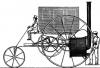
This is a very good example explaining what's wrong with a lot of AI applications using GMail as an example. "The Gmail team built a horseless carriage because they set out to add AI to the email client they already had, rather than ask what an email client would look like if it were designed from the ground up with AI. Their app is a little bit of AI jammed into an interface designed for mundane human labor rather than an interface designed for automating mundane labor." The problem, writes Pete Koomen, is that the useful bits are hidden from the user. "Most AI apps should be agent builders, not agents." Great insight.
Web: [Direct Link] [This Post][Share]
There are many ways to read OLDaily; pick whatever works best for you:
- Read in your web browser on this web page, updated weekdays
- Receive a daily or weekly email newsletter by subscribing here
- Subscribe to the RSS feed using your favourite feed reader
- Follow @OLDaily@mastodon.social on Mastodon or elsewhere in the fediverse
- Follow @OLDaily on Twitter
- Integrate the open API using the JSON feed
This newsletter is sent only at the request of subscribers. If you would like to unsubscribe, Click here.
Know a friend who might enjoy this newsletter? Feel free to forward OLDaily to your colleagues. If you received this issue from a friend and would like a free subscription of your own, you can join our mailing list. Click here to subscribe.
Copyright 2025 Stephen Downes Contact: stephen@downes.ca
This work is licensed under a Creative Commons License.