

New Today

Display
files/images/OffTheNetwork.JPG


Off the Network: Disrupting the Digital World
Ulises Mejias, June 16, 2013

Icon

Oh cool, Ulises Mejias has given us some weekend reading - "new book, Off the Network: Disrupting the Digital World, ... In it, I propose that digital networks increase opportunities for social and civic participation at the same time that they create certain kinds of inequalities, and I explore the question of how we would go about "unthinking" the network, and to what end. You can pick up a paper copy from your favorite bookseller. Thanks both to Minnesota Press and SUNY Oswego, the book is also available in an open access format, so you can read or download the whole manuscript right now -- for free! You can share the news by using the link offthenetwork.info (which redirects you to the publisher's page). Or you can send people to my personal website: ulisesmejias.com." We don't really have bookstores in Moncton any more (there's a Chapters but it mostly sells gifts and toys) but if I see it anywhere I'll be sure to but it - having a Mejias on your bookshelf is like having a fine wine.


G8 Science Ministers Statement London UK, 12 June 2013
G8, June 16, 2013

I echo and support (enthusiastically) the G8 science ministers' committment to open scientific research: "To the greatest extent and with the fewest constraints possible publicly funded scientific research data should be open, while at the same time respecting concerns in relation to privacy, safety, security and commercial interests, whilst acknowledging the legitimate concerns of private partners. Open scientific research data should be easily discoverable, accessible, assessable, intelligible, useable, and wherever possible interoperable to specific quality standards." There's also language on peer-reviewed research papers. These things take their time to become policy, of course, but I am hopeful my work will be impacted by this statement. There's also a short THE article. Related, from a JISC discussion: Where are university websites hiding all their research?

Display
files/images/occupations.JPG


A critical path: Securing the future of higher education in England
Institute for Public Policy Research, June 16, 2013

Icon

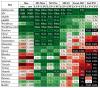
The IPPR Commission on the Future of Higher Education sets out a challenge for Britain's Open University: "English higher education institutions should embrace the potential of new technologies by recognising credit from low-­cost online courses so that these may count, in part, towards degree programmes. To make a start down this road we recommend that the Open University should accredit MOOCs provided via the FutureLearn platform so that they can count towards degree programmes offered by the OU itself and its partner institutions." This and 22 other recommendations may be found in its report on Securing the Future of Higher Education in England (156 page PDF). Here's a summary.

Display
files/images/logo.jpg


Working Examples
June 16, 2013

Icon

This is interesting: "Working Examples is a place where people working at the intersection of technology and education collaborate to solve problems, share their progress (and missteps) and make exciting things happen." I like the design and approach. I like concept of the 'Hall of Fail'. I don't like being asked to fill out Yet Another Profile (and especially that it 'requires' a picture and descirption and such). It seems to me though that it's going after the same niche as LinkedIn, which means it has some very tough sledding ahead.


'Happy Birthday' for All: Filmmaker Aims to Free Song From Copyright Grip
Eriq Gardner , The Hollywood Reporter, June 16, 2013

Sherlock Holmes is in the public domain. Yet a company that claims it holds the 'rights' to Sherlock Holmes makes threats and enforces ownership by sending messages like this: "do not expect to see it offered for sale by Amazon, Barnes & Noble, and similar retailers. We work with those company’s routinely to weed out unlicensed uses of Sherlock Holmes from their offerings, and will not hesitate to do so with your book as well." Zorro is public domain. And yet a publishers "have built a licensing empire out of smoke and mirrors." But the biggest scam of all may be the putative copyright over "Happy Birthday." Evidence? "The public began singing 'Happy Birthday to You' no later than the early 1900s." As evidence, the lawsuit cites a January 1901 edition of an Indiana school journal that described children singing the words 'happy birthday to you.'" And yet a company has been asserting a copyright for years, based on a 1924 songbook and a 1935 piano arrangement.


And So It Begins
http://canadianwayfarer.wordpress.com/2013/05/31/52/, ... And So It Begins, June 16, 2013

My friend Scott Agnew (who I don't know really well, but well enough) has sold his house and all his stuff and is embarking  for the forseeable future on a wandering tour of the world. It's an adventure that reminds me in more ways than one of the Motorcycle Diaries and I'm sure the travels will be equally influential on Scott's outlook and perspective. I wish him well, and I will be following his blog. Godspeed.

Display
files/images/3ab99d0.png


Hire Economics: Why Applying to Jobs Is a Waste of Time
Lou Adler, LinkedIn, June 16, 2013

Icon

We hear a lot about how important degrees are to getting a job. But often it never comes up. When people are hired internally or through their network, it's their performance, not their credentials, that resonates. And as this article shows, that's the case for most hiring - companies turn to job postings and resume screening only as a last resort. So while I would not recommend people not get degrees, I would emphasize that it is at least as important - and over time will be more important - to cultivate and work with a network of practitioners. That's why volunteer work, writing and blogging, open source programming, and similar activities are so important to your career prospects.

Display
files/images/Lanier4.jpg


Review of Jaron Lanier’s “Who Owns the Future” – or how to extrapolate from false premises
Scott Jackisch , h+, June 16, 2013

Icon

It's not exactly a favorable review, or even a fair one, but the value of this article is that it gives the reader a sense of what's in the book (which, ultimately, is the prupose of a good review). "The premise of Lanier’s new book 'Who Owns the Future' is that big data players are shrinking the economy by leveraging the largest servers to achieve information supremacy and then radiating risk out into the world." This is a really interesting concept - we are already familiar with the idea of 'the winner of an all-or-nothing contest' in a network; that was one of the main ideas in Albert-László Barabási's model. The idea that they 'radiate risk' is (to me, at least) new. I wish the reviewer had said more about it.

Links and Resources

(presentations include slides and audio recordings)
Videos: http://www.downes.ca/me/videos.htm
RSS Feed: http://www.downes.ca/news/OLDaily.xml
Podcast: http://www.downes.ca/news/audio.xml

Key Articles

Scholarly Articles

Cites:294 Educational Blogging (Local copy)
264 Learning objects: Resources for distance education worldwide (Local copy)
134 E-learning 2.0 (Local copy)
126 Models for sustainable open educational resources (Local copy)
88 The future of online learning (Local copy
75 Learning networks and connective knowledge (Local copy)
70 Design and reusability of learning objects in an academic context: A new economy of education (Local copy)
59 Resource profiles (Local copy)
40 Learning networks in practice (Local copy)
33 Semantic networks and social networks (Local copy)
35 An introduction to connective knowledge (Local copy)
27 Design, standards and reusability (Local copy)
23 EduSource: Canada's learning object repository network (Local copy)
22 An introduction to RSS for educational designers (Local copy)

(Cites from Google Scholar for an H-Index = 14)

Recent Popular Articles

The Purpose of Learning, February 2, 2011.
The Role of the Educator, December 6, 2010.
Deinstitutionalizing Education, November 5, 2010.
Agents Provocateurs, October 28, 2010.
What Is Democracy In Education, October 22, 2010.
A World To Change, October 19, 2010.
Connectivism and Transculturality, May 16, 2010.
An Operating System for the Mind, September 19, 2009.
The Cloud and Collaboration, June 15, 2009.
Critical Thinking in the Classroom, June 5, 2009.
The Future of Online Learning: Ten Years On, November 16, 2008.
Things You Really Need to learn: http://www.downes.ca/post/38502

Social Network

Twitter: http://twitter.com/downes
Slideshare: http://www.slideshare.net/Downes/
Facebook: http://www.facebook.com/downes
Flickr: http://www.flickr.com/photos/stephen_downes/
Google: http://www.google.com/profiles/sfdownes
Blip.tv: http://downes.blip.tv/
Contact: stephen@downes.ca Stephen.Downes@nrc-cnrc.gc.ca
Skype: Downes


About Stephen Downes

Stephen Downes is a senior researcher for Canada's National Research Council and a leading proponent of the use of online media and services in education. As the author of the widely-read OLDaily online newsletter, Downes has earned international recognition for his leading-edge work in the field of online learning. He developed some of Canada's first online courses at Assiniboine Community College in Brandon, Manitoba. He also built a learning management system from scratch and authored the now-classic "The Future of Online Learning".

At the University of Alberta he built a learning and research portal for the municipal sector in that province, Munimall, and another for the Engineering and Geology sector, PEGGAsus. He also pioneered the development of learning objects and was one of the first adopters and developers of RSS content syndication in education. Downes introduced the concept of e-learning 2.0 and with George Siemens developed and defined the concept of Connectivism, using the social network approach to deliver open online courses to three thousand participants over two years.

Downes has been offering courses in learning, logic, philosophy both online and off since 1987, has 135 articles published in books, magazines and academic journals, and has presented his unique perspective on learning and technology more than 250 times to audiences in 17 countries on five continents. He is a habitual photographer, plays darts for money, and can be found at home with his wife Andrea and four cats in Moncton, New Brunswick, Canada.

Biographie

Stephen Downes travaille pour le Conseil national de recherches du Canada, où il a servi en tant que chercheur principal, basé à Moncton, au Nouveau-Brunswick, depuis 2001. Affilié au Groupe des technologies de l'apprentissage et de la collaboration, Institut de technologie de l’information, Downes est spécialisé dans les domaines de l'apprentissage en ligne, les nouveaux médias, la pédagogie et la philosophie.

Downes est peut-être mieux connu pour son bulletin quotidien, OLDaily, qui est distribué par Internet, courriel et RSS à des milliers d'abonnés à travers le monde. Il a publié de nombreux articles à la fois en ligne et sur papier incluant The Future of Online Learning (1998), Learning Objects (2000), Resource Profiles (2003), et E-Learning 2.0 (2005). Il est un conférencier populaire, apparaissant à des centaines de manifestations à travers le monde au cours des quinze dernières années.

Vision Statement

I want and visualize and aspire toward a system of society and learning where each person is able to rise to his or her fullest potential without social or financial encumberance, where they may express themselves fully and without reservation through art, writing, athletics, invention, or even through their avocations or lifestyle.

Where they are able to form networks of meaningful and rewarding relationships with their peers, with people who share the same interests or hobbies, the same political or religious affiliations - or different interests or affiliations, as the case may be.

This to me is a society where knowledge and learning are public goods, freely created and shared, not hoarded or withheld in order to extract wealth or influence. This is what I aspire toward, this is what I work toward.


Canadians who gave their lives in service in Afghanistan

Hundreds of my IAAF Track & Field Photos from Moncton 2010

My calendar