
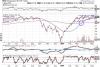
Tim Bray linked to this so I guess it's an OK link for a Bloomberg post even though it's in newsletterhunt. Matt Levine here writes, "I feel like a lot of stories in financial markets these days are about essentially this tension, 'everyone must prepare for apocalypse by owning AI stocks' vs. 'you are trying to trick us into owning AI stocks.'" And yet, the Standard and Poor (S&P) 500 index won't include SpaceX (which - just to be clear - is essentially an AI stock that also loses money launching space ships). Levine concludes, "It could be years before the big AI companies are profitable enough to get into the S&P. And then a few years after that, maybe they'll take over the world. In a sense, S&P is betting they won't." I don't really care one way or another which way the stocks go. But I do agree that betting on any of these companies at this point is a long shot, mostly because AI is math, and you can't own math.
Today: Total: Matt Levine, Bloomberg, 2026/06/08 [Direct Link]Please select a newsletter and enter your email to subscribe.

Stephen Downes spent 25 years as an expert researcher at the National Research Council of Canada, specializing in new instructional media and personal learning technology. With degrees in Philosophy and a background in journalism and media, he is one of the originators of the first Massive Open Online Course, has published frequently about online and networked learning, and is the author of the widely read e-learning newsletter OLDaily. He is a popular keynote speaker and has presented at conferences around the world. [More]
Support OLDaily
OLDaily has been free and open to all readers since 2001. It is a valuable and widely-used resource for educators, researchers, and learners worldwide. Please consider a monthly contribution to sustain the time and resources required to publish it every day.
Here's what's in the latest edition of OLDaily
David Hopkins links to Stuart Allen's webinar, Micro-credential Design Trends in Higher Education, which he describes as "one, structured and well-presented body of work that encapsulates the current state of microcredentials, how you get started on them, and all things a typical university needs to consider before being able to deliver it's first (or tenth) one."
Today: Total: David Hopkins, Education & Leadership, 2026/06/08 [Direct Link]This lab was referenced in a presentation today. "Our research identifies and addresses privacy, security, and reliability issues in information technologies, exploring mitigation strategies to create a safer technology ecosystem." It stands for PrivatE, Reliable, and SecUrE computing (PERSUE) Lab.
Today: Total: ASU, 2026/06/08 [Direct Link]
The whole of this newsletter is pretty interesting but especially so is the lead article. It's based on an argument from Alex Imas, What Will Be Scarce? (why wouldn't this newsletter actually link to it? I had to go search for it). The Imas argument is based on what people want as they get richer. "They want things that aren't commodities in the standard sense of the word. The social aspects of products such as the relationships, the status, and exclusivity - what Rene Girard called the mimetic properties of desire - become much more relevant once people's basic needs are satisfied." Rose Luckin, et al., convert this into a model of value based on provenance. "Education is a relational good in exactly this sense. The expensive independent school is not selling content. It is selling the teacher who knows the child, the cohort that child sits alongside, and the institution whose reputation makes that cohort meaningful." I think referencing the preferences of the rich takes us into an ethical minefield. And I think we have to sort between status symbols and genuine value. But that said, I agree, provenance matters. But not just because rich people like it.
Today: Total: Rose Luckin, et al., Educate Ventures, 2026/06/08 [Direct Link]Open source software is different from open education, of course, but there is overlap in the two communities' rejection of AI. In this post Justin Fowler outlines the four major open source arguments against AI and shows that they don't have a basis in fact. The objective isn't to get everybody to support AI, but rather, to foster a more productive dialogue about it. Meanwhile, "there's a coherent version of the pro-AI argument that says: AI vendors are toolmakers, not platform owners. Judge them by what their users produce. And the produce here is overwhelmingly more open source, faster." If the same holds true of open education, then we too need to reframe our discussion. Via Liam Proven.
Today: Total: Justin, From The Architect, 2026/06/05 [Direct Link]This is a long article, and ther title is a bit misleading, but it's entertaining, and contains elements of truth. I wouldn't exactly buy into the world view, but I know any number of people who would. It's based on comparing what AI does with what divination systems did through the ages - systems like the I Ching, the Oracle of Delphi, astrology. What they are all based on is not a big database of facts, but a method of seeing patterns and relationships in things. But there are two ways to look at this - as a type of calculation, a 'prediction', or as a type of interpretation, a 'divination'. "Empire does not divine. Empire predicts. And to make its predictions look like truth, it had to make divination look like superstition." And it becomes 'colonialism' when "it manufactures the predicted outcome rather than say: I don't know." That's what the surveillance systems in Tesco are being used for, and where the art of not being seen becomes a strategy. But "the system doesn't give you the answer. The system creates the conditions for the answer to arrive from the collision between the corpus and the question you brought. You are never optional."
Today: Total: Abi Awomosu, How Not to Use AI, 2026/06/05 [Direct Link]Web - Today's OLDaily
OLDaily Email - Subscribe
Web - This Week's OLWeekly
OLWeekly Email - Subscribe
RSS - Individual Posts
RSS - Combined version
JSON - OLDaily
Podcast - OLDaily Audio
Websites
Stephen's Web and OLDaily
Half an Hour Blog
Leftish Blog
MOOC.ca
Stephen's Guide to the Logical Fallacies
gRSShopper
Let's Make Some Art Dammit
Email: stephen@downes.ca
Email: Stephen.Downes@nrc-cnrc.gc.ca
Skype: Downes
Professional
National Research Council Canada
Publications
Presentations
All My Articles
My eBooks
About Stephen Downes
About Stephen's Web
About OLDaily
Subscribe to Newsletters
gRSShopper
Privacy and Security Policy
Statistics
Archives
Courses
CCK 2008, 2009, 2011, 2012
PLENK 2010
Change 11 - 2011
Education Futures - 2012
Learning Analytics - 2012
REL 2014
Personal Learning - 2015
Connectivism and Learning - 2016
E-Learning 3.0 MOOC - 2018
Ethics, Analytics - 2020
Stephen Downes, Casselman, Canada
stephen@downes.ca
Last Updated: Jun 09, 2026 07:37 a.m.